The Beginning
AI is no longer a dream of the future; it’s a real, changing technology that is changing the way we live, work, and think. AI is still the most important thing for global innovation in 2025. Every month, there are new advances in automation, machine learning, robotics, and natural language processing. AI is the quiet force behind progress in many fields, including healthcare, education, finance, and the arts.
AI isn’t just another tech trend as we move further into the digital age. This is a revolution that is changing how people and machines live together. This article looks at the biggest breakthroughs in AI and how they affect the real world in many fields. It also looks at the moral and economic issues that will shape our future.
1. The Next Generation GPT Models from OpenAI
OpenAI’s release of a new version of its GPT model is one of the most important things that will happen in 2025. This model is multi-modal, which means it can understand and create not only text, but also voice, video, and images all at the same time.
This generation of GPT is different from the ones that came before it in that it can think like a person, understand context across various media formats, and even keep the same emotional tone in conversation. It’s already being used in schools, for customer service, and in the arts.
Think about a student talking about a math problem out loud and showing a diagram, and the AI tutor instantly gets it and explains the answer. That’s what makes OpenAI’s newest model so special: it doesn’t just respond; it understands.
What it means in the real world:
Virtual assistants that can handle both spoken and written commands that are made just for you.
Healthcare chatbots that can read both patient descriptions and medical images at the same time.
Better creative tools that let people work together to make music, images, and text.
2. AI in Healthcare: Saving Lives Before They Show Symptoms
The healthcare industry is one of the biggest winners from AI innovation in 2025. Deep learning models that can understand complicated brain scans, genetic data, and patient histories have made it possible to find diseases early.
Scientists at big universities have made systems that can find the early signs of Alzheimer’s, Parkinson’s, and even some cancers before any symptoms show up. These models don’t take the place of doctors; they help them by giving them strong analytical support.
For example, a recent study showed that AI could find small changes in MRI scans years before other ways of diagnosing them. This lets doctors step in early, which raises survival rates and lowers healthcare costs around the world.
Other important ways that AI is used in healthcare are:
Using lifestyle data and wearable devices to guess what health risks might happen.
Helping surgeons recognize images in real time during surgery.
Making personalized treatment plans based on predictions made with data.
Healthcare experts all agree that AI’s main goal is not to take over human care, but to make it faster, more accurate, and available to everyone.
3. The Robotics Revolution by DeepMind
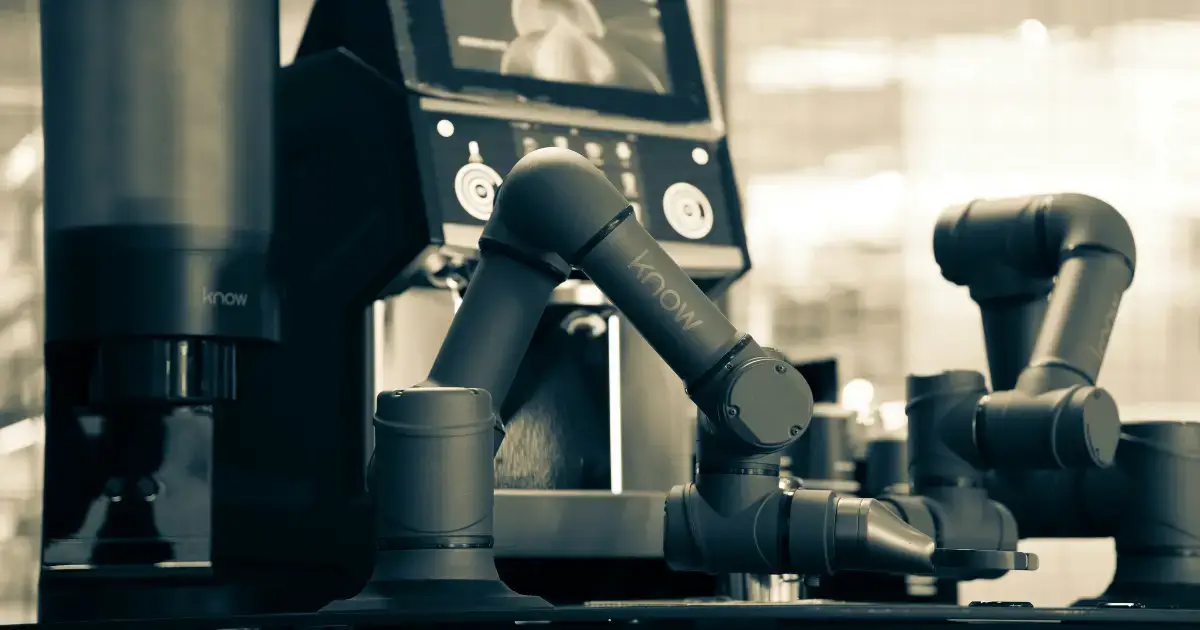
This year, Google DeepMind has made great strides in making robots smarter. Its newest robotics framework lets machines learn tasks through generalized reinforcement learning. This means that robots can now teach themselves new skills by looking for patterns instead of having to code them by hand.
Robots that have been trained in this way can already do complicated tasks like sorting lab materials, cleaning up, or putting together fragile electronic parts, all with very little help from people.
One of the best things about DeepMind’s technology is how flexible it is. Robots can now take what they’ve learned and use it in completely different settings, rather than being programmed for just one task.
For example, a robot that learns how to handle lab glassware can easily move to work in a hospital or kitchen.
This progress brings us closer to the time when robots will be more than just tools in industries; they will be useful partners.
4. AI in Education: Making Learning Unique for Each Student
In 2025, education changed in a big way, but not in a loud way. AI-powered learning platforms now tailor the whole educational experience to each student.
Students can now learn at their own pace with the help of virtual tutors that use adaptive AI algorithms, instead of a one-size-fits-all curriculum. These tutors look at each student’s progress, find their weak spots, and change how they teach based on what they see.
For instance, a student who is having trouble with algebra can get simpler explanations and more visual examples. In contrast, a student who is doing well in language arts can be given harder exercises.
Advantages of AI in Education:
Learning paths that are unique to each student.
Tracking performance in real time and giving feedback right away.
Making it easier for students in remote areas to learn.
Education is changing from being standardized to being personalized as AI tutors become more like people and can understand how others feel. This change could change how future generations learn.

5. AI in Business and Money
AI is no longer just a technical luxury in the business world; it is now a strategic asset. Companies use it to look at how people act, speed up workflows, find fraud, and make decisions based on data faster than ever before.
Financial institutions have also used AI for predictive analytics, which means they can predict market trends, find risks, and even make automated trading strategies.
For instance, fintech startups now use AI to look at behavioral data instead of just credit scores to figure out if someone is creditworthy. This has made it possible for millions of people who couldn’t get money before to do so.
Important business changes:
Chatbots that are smarter and work around the clock.
Using AI to make better predictions about the supply chain.
Systems that look for fraud by watching transactions as they happen.
AI is helping businesses come up with new ideas and save money at the same time. Companies that don’t pay attention to AI in the next few years could fall behind in terms of efficiency, productivity, and customer service.
6. AI in the Arts and Media
It sounded strange a few years ago that AI could make music or art. Now, it’s a normal part of life.
AI has become a creative partner in everything from making movies and music to making digital art and writing. Filmmakers, designers, and musicians can now create high-quality content much faster and for much less money thanks to platforms like Runway, Synthesia, and Midjourney.
But even with these improvements, human creativity is still irreplaceable. AI can make things, but it can’t feel. The artist’s feelings are still what make the art special; AI makes them better.
AI is used in creative fields like
Writers use AI tools to come up with new ideas or change old ones.
Game makers are making virtual characters that are smarter.
Artists combining human creativity with machine accuracy.
AI doesn’t compete with creativity; it makes it stronger.
7. The Moral Side of AI
As AI gets smarter, it’s more important than ever to have rules about how it should be used. Governments and businesses are now working together around the world to make sure that AI stays open, fair, and responsible.
Developers still have to deal with worries about privacy, deepfakes, false information, and biased algorithms. In 2025, the focus is on creating “responsible AI,” or systems that are in line with human values and the goals of society.
Some important moral priorities are:
Keeping people safe and stopping data abuse.
Making sure that AI decisions can be explained and held accountable.
Making sure that algorithms don’t have bias that affects hiring or the justice system.
Ethical AI isn’t just a fad; it’s a must. To keep the public’s trust, the future of AI needs to find a balance between new ideas and honesty.
8. How AI affects jobs and the workforce
AI makes new jobs possible, but it also takes away old ones. Automation has already taken over some repetitive jobs, but it is also creating new jobs in AI development, data science, ethics, and digital transformation at the same time.
Experts say that even though machines may take over millions of low-skill jobs, new industries will open up that need people who are creative, emotionally intelligent, and good with technology.
In the age of AI, these are some careers that will last:
People who train AI systems and analyze data
Experts in cybersecurity
Designers of human-AI interactions
Officers in charge of AI ethics and compliance
To get workers ready for these changes, governments and businesses are now focusing on reskilling programs. In short, AI won’t get rid of jobs; it will change them.
9. The Future of AI: What Will Happen Next
AI’s path points to a deeper integration into daily life after 2025. AI will help smart cities save energy, get people around, and keep people safe. Healthcare systems will use predictive algorithms to provide personalized medicine. Even smart devices that run our homes will know what we need before we ask for it.
But experts say that moral principles should always guide progress. The goal of working together between human and artificial intelligence should not be to take over, but to create a future where AI helps people reach their full potential instead of replacing them.
What will happen in 2026 and later:
Fully self-driving cars are becoming common in cities.
Governance systems powered by AI are helping policymakers.
Generative AI is becoming more common in everyday productivity tools.
More cooperation around the world on AI safety and ethics standards.
Conclusion: An Intelligent Future—Human and Artificial
The AI revolution isn’t slowing down; it’s moving faster than any other technology in history. AI is now a part of almost every aspect of modern life, from figuring out what diseases people have to teaching kids to write music and run businesses.
What makes this revolution truly amazing is not the machines themselves, but how people change to use them. The future of AI is in working together, with people providing vision, empathy, and ethics, and machines providing speed, accuracy, and scalability.
As we move into a world powered by both natural and artificial intelligence, one thing is for sure: the future is not about machines versus people, but people and machines working together.
Apex Tech Realm will keep you up to date with monthly news, expert opinions, and the newest breakthroughs in AI and other new technologies. The trip has only just begun.